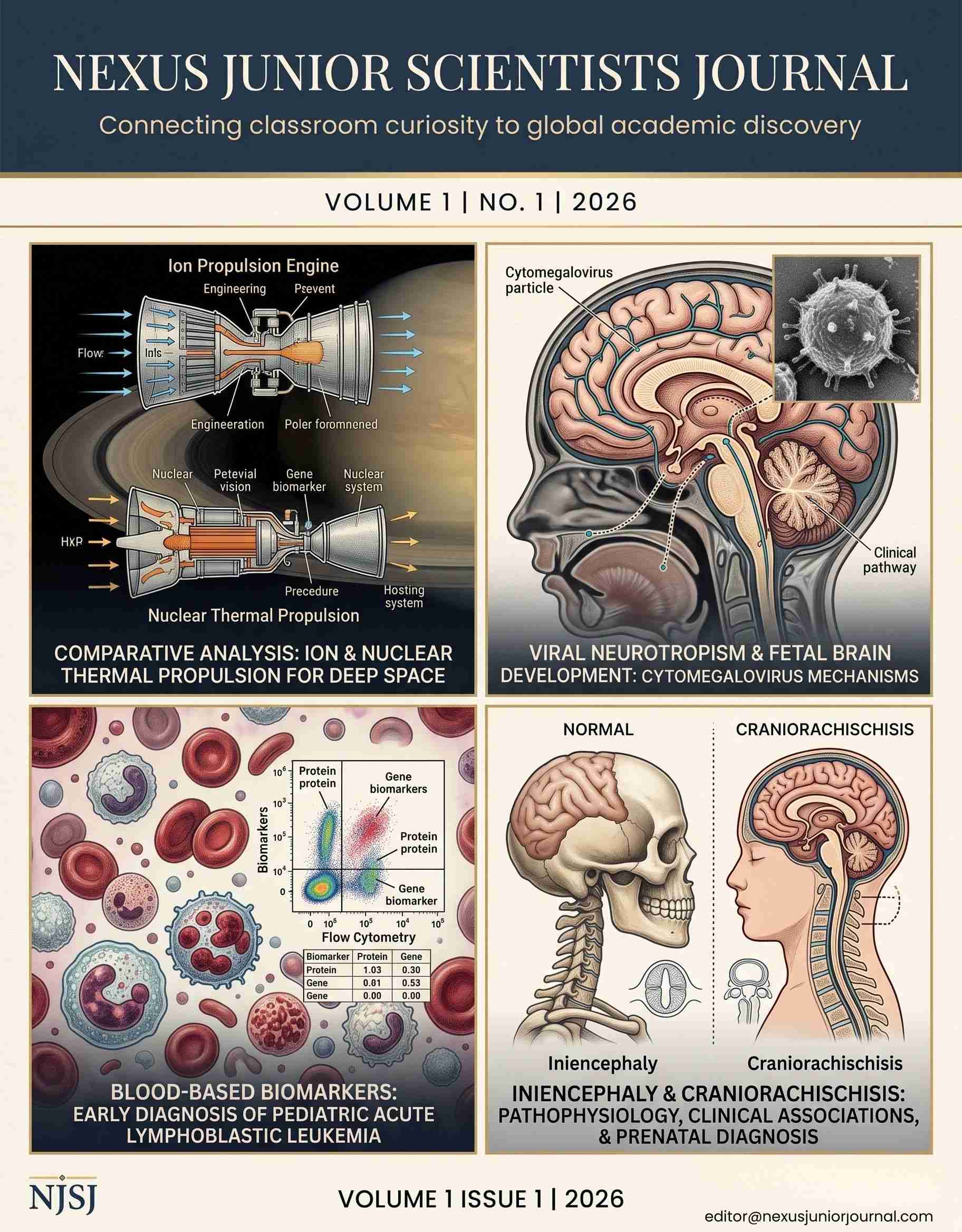
Congenital cytomegalovirus: pathophysiological mechanisms of viral neurotropism and its consequences on fetal brain development.
Keywords:
Cytomegalovirus, congenital infection, teratogenic agents, microcephaly, cortical defectsAbstract
Congenital infections constitute an important group of teratogenic agents capable of interfering with fetal development through inflammatory, vascular, and cytopathic mechanisms. Among them, congenital cytomegalovirus infection stands out as one of the main infectious causes of central nervous system impairment. This article aims to review the transmission mechanisms, pathophysiology, clinical manifestations, and diagnostic methods of congenital cytomegalovirus (CMV) infection, with emphasis on neurological and neurodevelopmental alterations. Fetal transmission occurs mainly transplacentally after primary or non-primary maternal infection. CMV exhibits tropism for neural progenitor cells, promoting cell death, inflammation, and neuronal migration disorders, which can result in microcephaly, ventriculomegaly, periventricular calcifications, cerebellar hypoplasia, and cortical malformations. In addition to the central nervous system, the infection can affect the retina, cochlea, liver, spleen, bone marrow, and placenta, contributing to manifestations such as chorioretinitis, sensorineural hearing loss, intrauterine growth restriction, hepatosplenomegaly, anemia, and thrombocytopenia. Diagnosis involves maternal serological evaluation, fetal and neonatal molecular tests, and imaging methods. It is concluded that understanding the pathophysiological mechanisms of congenital cytomegalovirus infection is fundamental for early diagnosis, multidisciplinary follow-up, and a better understanding of the structural and functional alterations associated with fetal development. This is a literature review on Cytomegalovirus infection, addressing its pathophysiology, teratogenesis, and diagnosis.
References